Best AI Search Tools for Students
The best AI search tool for students is the one that makes sources easier to inspect, not one that hides uncertainty behind a fluent answer. Students should optimize for citations, source diversity, academic fit, and the ability to verify claims quickly.
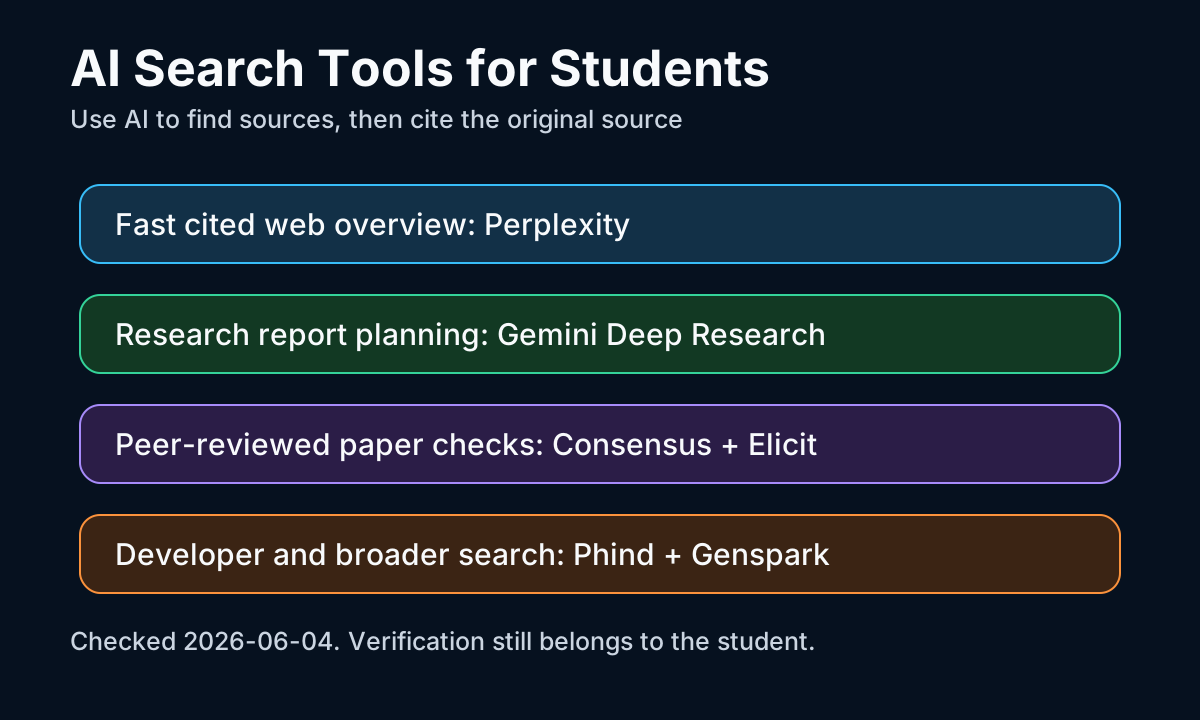
| Tool | Best for |
|---|---|
| Perplexity | Fast cited web research |
| Gemini Deep Research | Google-backed research reports |
| Consensus | Peer-reviewed question checks |
| Elicit | Literature review tables |
| Phind | Developer and CS questions |
| Genspark | Broader agent-style search |
The tools, one by one
Perplexity is the easiest first stop when a student needs a sourced overview. Its value is not that it replaces search, but that it compresses search results into a trail of sources that can be opened, rejected, or cited manually.
Gemini Deep Research is useful when the assignment requires a longer report plan. Google's help documentation says Deep Research includes Google Search as a source by default, and some plans can include visuals like charts or diagrams in reports.
Consensus and Elicit are better for academic paper work. Consensus helps check where peer-reviewed literature points on a question; Elicit helps build tables from papers. Both still require the student to read the source material before citing it.
Phind is useful for computer science and developer questions because the search intent is often technical: error messages, API behavior, code examples, or library tradeoffs. Students should still compare results with official docs before submitting code.
Students should not cite an AI answer directly. Cite the original source the AI tool found, verify that the source says what the AI claims, and keep notes on when the source was checked.
Frequently asked questions
What is the best AI search tool for students?
For a sourced overview, Perplexity is the easiest first stop because it compresses results into a trail of sources you can open and cite manually. For academic papers use Consensus and Elicit; for developer questions use Phind. Pick by whether you need web sources, peer-reviewed papers, or technical answers.
Can I cite an AI tool in an essay?
Don't cite the AI answer directly. Cite the original source the tool found, verify that the source actually says what the AI claims, and keep notes on when you checked it. AI search speeds up discovery; the citation must point to the primary source.
Which tool is best for a literature review?
Elicit — it helps build tables from papers and supports systematic-review workflows. Use Consensus alongside it to check where peer-reviewed literature points on a question. Both still require you to read the source material before citing.
Sources and evidence
Sources
- PerplexityChecked 2026-07-07Medium volatility
Use for official product positioning and documented capabilities as of the check date.
- Google Gemini (Deep Research help)Checked 2026-07-07Medium volatility
Use for official product positioning and documented capabilities as of the check date.
- Consensus help centerChecked 2026-07-07Medium volatility
Use for official product positioning and documented capabilities as of the check date.
- Elicit product pagesChecked 2026-07-07Medium volatility
Use for official product positioning and documented capabilities as of the check date.
- Phind plansChecked 2026-07-07High volatility
Use for plan structure and pricing context as of the check date; verify the official page before purchase.
- GensparkChecked 2026-07-07Medium volatility
Use for official product positioning and documented capabilities as of the check date.