Claude vs Gemini: Which AI Assistant Fits Your Workflow?
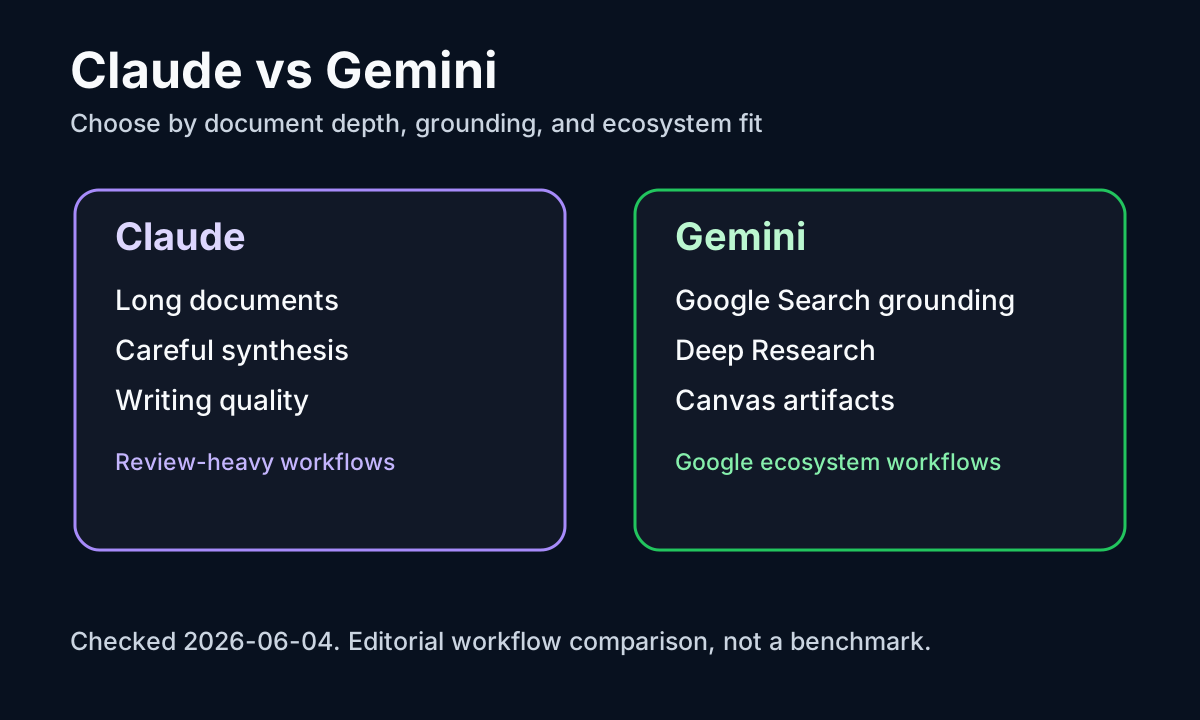
Claude and Gemini are both strong general assistants, but they solve different workflow problems. Claude is easier to justify when the task is careful reading and writing; Gemini is easier to justify when the task is research or creation inside the Google ecosystem.
| Dimension | Claude | Gemini |
|---|---|---|
| Long-document reasoning | Stronger — careful reading, synthesis, tone | Capable, less deliberate on review loops |
| Web-grounded research | Web search available when enabled | Google Search included by default in Deep Research |
| Ecosystem fit | Standalone, MCP integrations | Native to Gmail, Docs, Drive, Search |
| Turning research into artifacts | Text-first output | Higher tiers add charts/diagrams |
| Main review risk | Verify facts when search is off | Don't treat a polished report as final evidence |
Where Claude pulls ahead
Claude's advantage is the review loop. If the user expects the assistant to read a long policy, compare multiple drafts, preserve tone, and flag uncertainty, Claude often feels more deliberate. Recent Claude help pages also describe web search, chat search, and memory controls, which are useful when context management matters.
Where Gemini pulls ahead
Gemini's advantage is connected research. Google's Gemini Deep Research help says Google Search is included by default as a source, and higher-tier reports may include visual outputs such as charts or diagrams. That makes Gemini a better fit for research outputs that need to become working artifacts.
For writers, Claude is usually the better first test. For analysts and students who need source discovery, Gemini deserves an early test because Search, Deep Research, and Canvas-style continuation can reduce tool switching.
The risk is different too. Claude users should still verify factual claims when web search is not enabled or not triggered. Gemini users should avoid treating an attractive research artifact as final evidence; the source trail still needs manual checking.
Claude is usually better for long-form writing and careful document synthesis, while Gemini is usually better when the work depends on Google Search, Google files, and turning research into structured artifacts.
Frequently asked questions
Is Claude or Gemini better for research?
Gemini has the edge when the research needs live web sources, because Google Search is included by default in Deep Research and higher tiers can output charts and diagrams. Claude is better when the research is really careful reading and synthesis of documents you already have.
Which is better for writing?
Claude is usually the better first test for writers. Its review loop — preserving tone, comparing drafts, and flagging uncertainty — tends to feel more deliberate for long-form and nuanced writing.
Do I still need to fact-check either one?
Yes. With Claude, verify factual claims when web search is off or not triggered. With Gemini, don't treat a polished research artifact as final evidence — the source trail still needs a manual check.
Sources and evidence
Sources
- Claude help center (web search, MCP, memory)Checked 2026-07-07Medium volatility
Use for official product positioning and documented capabilities as of the check date.
- Google Gemini (Deep Research help)Checked 2026-07-07Medium volatility
Use for official product positioning and documented capabilities as of the check date.