Ideogram vs Midjourney: Typography or Visual Style?
Ideogram and Midjourney overlap on image generation, but their strongest use cases are different. Ideogram should be tested first when text inside the image matters; Midjourney should be tested first when mood, style, and visual finish matter most.
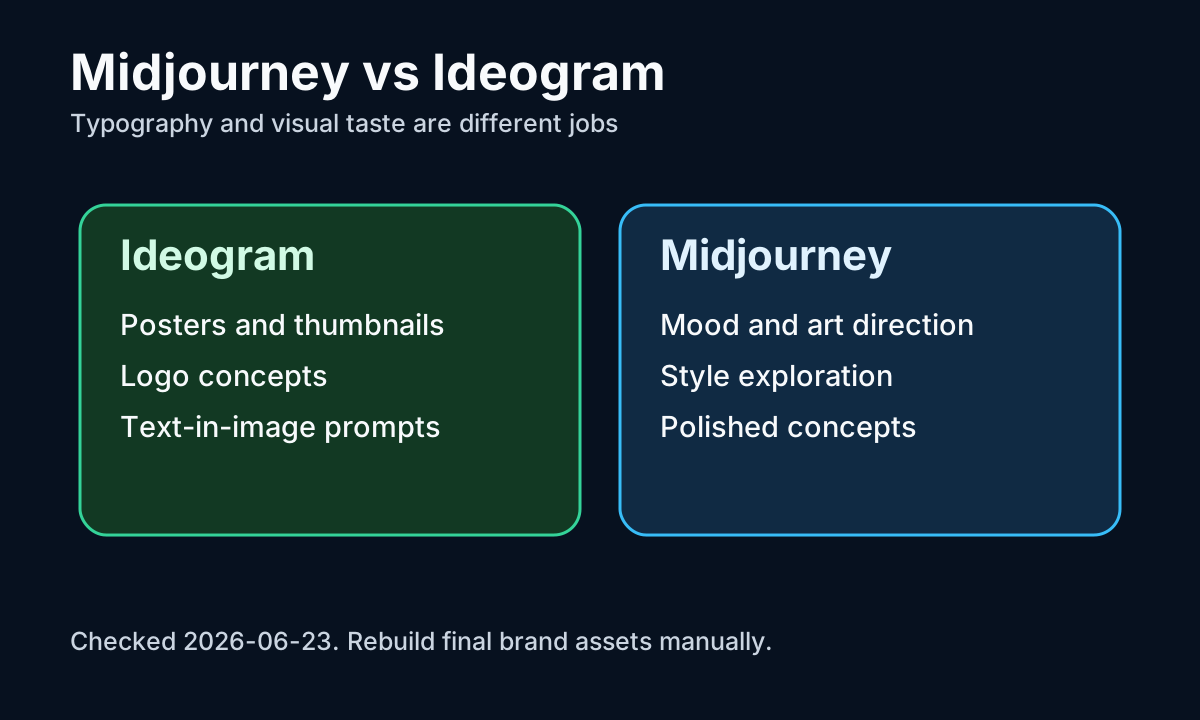
| Dimension | Ideogram | Midjourney |
|---|---|---|
| Text inside the image | Leading focus — logos, posters, ads | Weaker; not its main strength |
| Visual style & finish | Capable | Leading — mood, art direction, polish |
| Typical use | Text-forward design executions | Moodboards, style exploration, concepts |
| Shared caveat | Spelling errors still happen | Not a final, cleared logo |
Ideogram: when text in the image matters
Ideogram's public feature pages explicitly focus on text rendering, and its docs explain that it excels at integrating text into images for logos, branding, print-on-demand, and design layouts. That does not mean every word is guaranteed; Ideogram's own docs still warn that spelling mistakes can happen.
Midjourney: when style and mood matter
Midjourney is stronger when the prompt is mostly about visual taste. Its docs cover image prompts, personalization, moodboards, and website editing, which makes it useful for building a visual direction before a designer turns the result into final production files.
For brand teams, the decision is often sequential. Use Midjourney to find the mood and Ideogram to test text-forward executions. Then rebuild the final output in a design tool when exact typography, vector control, and licensing review matter.
Do not use either output as a final logo without review. AI-generated logos can contain awkward letterforms, hidden artifacts, and rights questions. Treat them as concept generators unless the final asset has been manually cleaned and cleared.
Ideogram is usually better than Midjourney for readable text inside images, while Midjourney is usually better for polished visual style, moodboards, and creative art direction.
Frequently asked questions
Which is better for logos and posters?
Test Ideogram first — it is built around rendering readable text in images, which is what logos, posters, thumbnails, and ads need. But treat the result as a concept: Ideogram's own docs warn spelling errors can still happen, so clean and clear the final asset in a design tool.
Which has better image quality and style?
Midjourney is usually stronger when the job is mood, art direction, style exploration, and polished visual finish. It is the better first test when the prompt is mostly about visual taste rather than exact words.
Can I use either output as a final brand logo?
No, not without review. AI-generated logos can contain awkward letterforms, hidden artifacts, and rights questions. For brand work, use Midjourney to find the mood and Ideogram for text-forward executions, then rebuild the final in a design tool.
Sources and evidence
Sources
- Ideogram text rendering and typography docsChecked 2026-07-07Medium volatility
Use for official product positioning and documented capabilities as of the check date.
- Midjourney docs (image prompts, web, moodboards)Checked 2026-07-07Medium volatility
Use for official product positioning and documented capabilities as of the check date.