Best AI Video Generators for Creators and Teams
AI video tools split into two categories: generative video tools that create or animate footage, and production tools that turn scripts, avatars, transcripts, or edits into finished videos. Choosing between them matters more than choosing a famous brand.
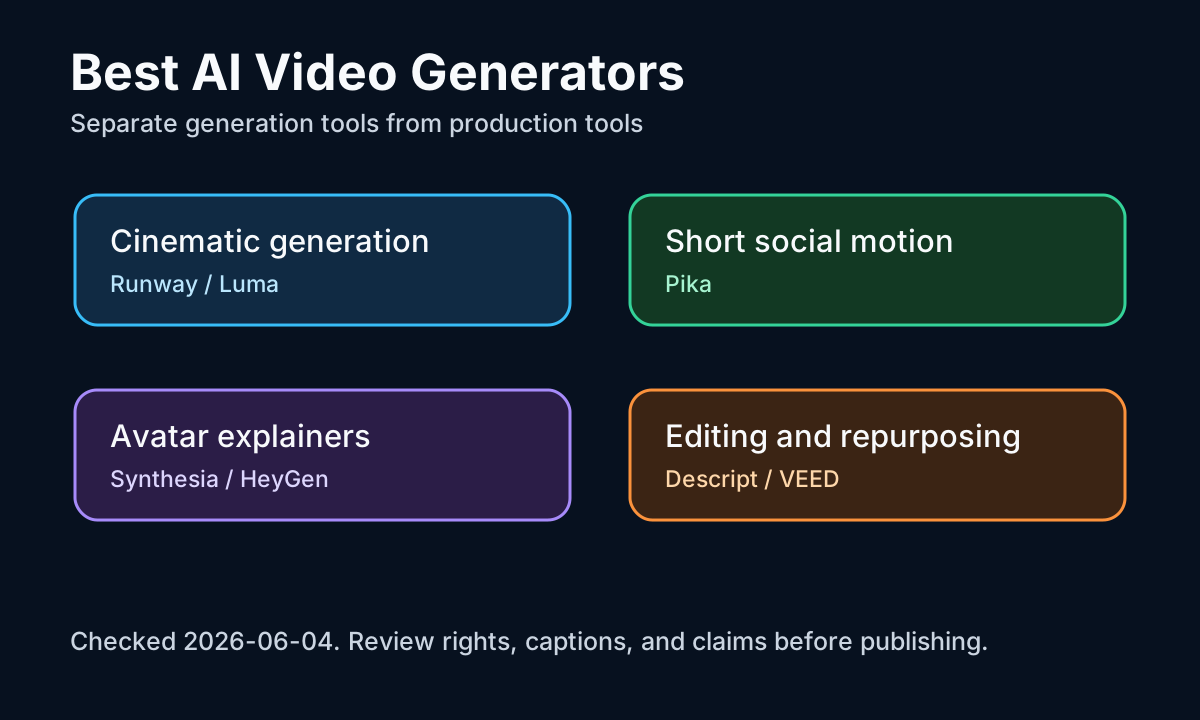
| Tool | Category | Best for |
|---|---|---|
| Runway | Generative | Cinematic generation with world consistency |
| Luma Dream Machine | Generative | Image-to-video and API workflows |
| Pika | Generative | Short social-first motion experiments |
| Synthesia / HeyGen | Avatar/production | Avatar explainers, training, internal comms |
| Descript / VEED | Production | Editing, captions, repurposing, team publishing |
The tools, one by one
Runway is the strongest shortlist item for generative video control. Its Gen-4 help page describes creating 5 or 10 second videos from an input image and text prompt, and Runway's research page emphasizes world consistency across scenes.
Luma Dream Machine is useful when developers or product teams need image-to-video and API paths. Luma's docs say the Dream Machine API can generate images and videos, including image-to-video workflows.
Synthesia belongs in a different category. Synthesia docs describe creating AI videos from prompts, URLs, files, or templates, and its avatar docs explain avatar management and consent-based personal avatar workflows. This is more training and internal communications than cinematic generation.
For teams, the workflow risk is review. Generated motion can look impressive but still fail brand, factual, legal, or accessibility checks. Build a review path for claims, likeness rights, music, captions, and source assets before scaling output.
Runway and Luma are usually better for cinematic generated video, Pika for fast social clips, Synthesia and HeyGen for avatar explainers, and Descript or VEED for editing and repurposing existing footage.
Frequently asked questions
What is the best AI video generator?
First split generative from production. For cinematic generated video, Runway and Luma lead; for short social motion, Pika; for avatar explainers, Synthesia or HeyGen; for editing and repurposing existing footage, Descript or VEED. The category matters more than the brand.
Which AI video tool is best for avatar explainers?
Synthesia or HeyGen. Synthesia creates AI videos from prompts, URLs, files, or templates with consent-based personal-avatar workflows — geared to training and internal communications rather than cinematic generation.
What should teams check before scaling AI video?
Build a review path. Generated motion can look impressive but still fail brand, factual, legal, or accessibility checks — verify claims, likeness rights, music licensing, captions, and source assets before scaling output.
Sources and evidence
Sources
- Runway Gen-4 help and research pagesChecked 2026-07-07Medium volatility
Use for official product positioning and documented capabilities as of the check date.
- Luma Dream Machine docsChecked 2026-07-07Medium volatility
Use for official product positioning and documented capabilities as of the check date.
- Synthesia video and avatar docsChecked 2026-07-07Medium volatility
Use for official product positioning and documented capabilities as of the check date.
Evidence
- Decision matrixChecked 2026-07-07
An editorial source ledger recording which official pages were checked and on what date — not a measured benchmark.
Methodology