Lovable vs Bolt.new vs v0: Which AI App Builder Should You Use?
Lovable, Bolt.new, and v0 all promise to turn prompts into working software, but they are not interchangeable. The right choice depends on whether you need product-level full-stack generation, browser-native prototyping, or Vercel-native UI and app deployment.
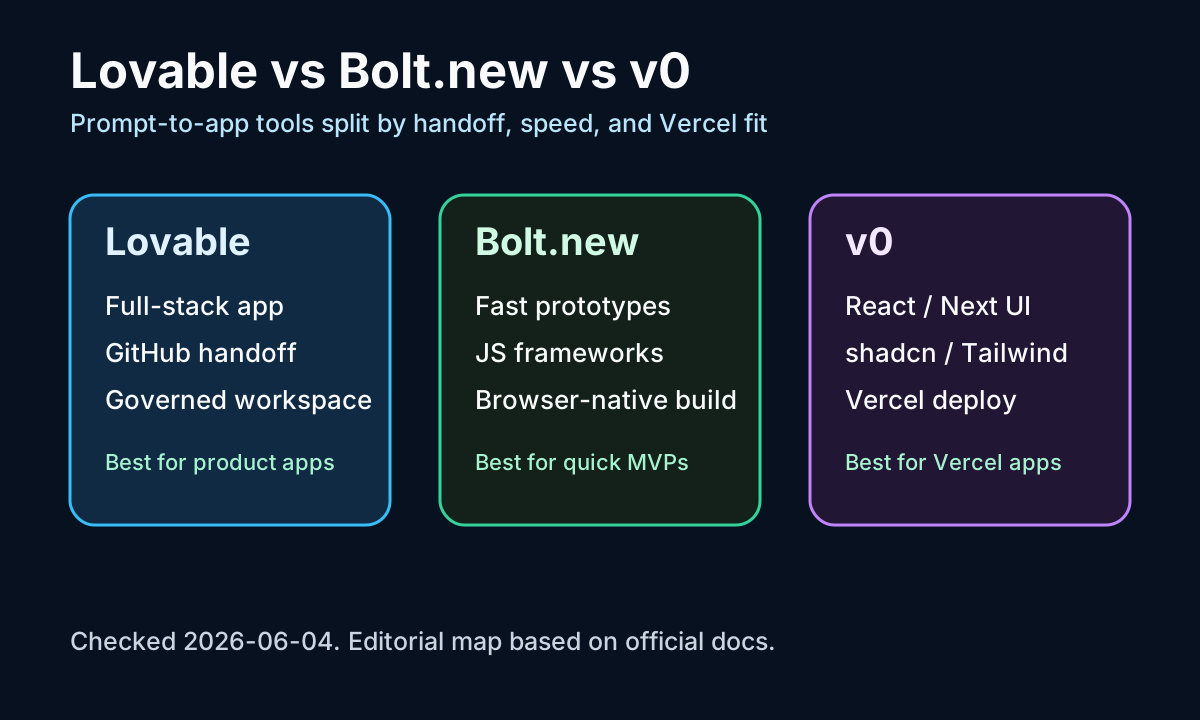
| Tool | Core strength | Stack / output | Best for |
|---|---|---|---|
| Lovable | Governed full-stack app with real code | Frontend + backend + DB + auth, GitHub sync | Apps that must survive engineering handoff |
| Bolt.new | Fast browser-native prototyping | JavaScript frameworks, fast web deploy | Founders wanting a running prototype fast |
| v0 | Vercel-native UI and full-stack apps | React, Next.js, Tailwind, shadcn/ui, Vercel | Output that should deploy on Vercel from day one |
What each builder is actually best at
Lovable's documentation describes it as a full-stack AI development platform for building, iterating on, and deploying web apps with natural language. It emphasizes real code, frontend, backend, database, authentication, integrations, shared workspaces, and GitHub sync, so it is the best fit when a generated app must survive engineering handoff.
Bolt's own introduction calls Bolt an AI-powered builder for websites, web apps, and mobile apps, with JavaScript-based frameworks and fast web deployment. That makes it useful for founders and builders who want a running prototype before they know the final architecture.
Vercel's v0 docs position v0 as an AI-powered development platform that turns ideas into production-ready, full-stack web apps. v0 is especially strong when the app should use modern React, Next.js, Tailwind, shadcn/ui, and Vercel deployment from the beginning.
The risk to check before production
The practical risk is code ownership. Prompt-to-app tools can create a working demo faster than a team can review it. Before production, inspect environment variables, authentication paths, database rules, generated dependencies, and whether the codebase can be maintained outside the tool.
Lovable is best when the app needs full-stack structure and handoff, Bolt.new is best for fast browser-native prototypes, and v0 is best when the output should become a Vercel-ready React or Next.js application.
Frequently asked questions
Which is best for a non-technical founder?
Bolt.new is the easiest way to get a running prototype fast before you know the final architecture. If you already know the app must become a maintainable full-stack product with a backend, database, and auth, start with Lovable so the output survives an engineering handoff.
Do I own and can I export the generated code?
Lovable emphasizes real code with GitHub sync, and v0 outputs standard React/Next.js. Regardless of tool, before production inspect environment variables, auth paths, database rules, and whether the codebase can be maintained outside the tool.
Which one deploys most easily?
v0 is Vercel-native, so React/Next.js apps deploy naturally there. Bolt.new offers fast web deployment for JavaScript apps, and Lovable deploys full-stack apps with its own build plus GitHub sync for external hosting.
Sources and evidence
Sources
- Lovable pricing and docsChecked 2026-07-07High volatility
Use for plan structure and pricing context as of the check date; verify the official page before purchase.
- Bolt.new pricing and docsChecked 2026-07-07High volatility
Use for plan structure and pricing context as of the check date; verify the official page before purchase.
- v0 pricing and docsChecked 2026-07-07High volatility
Use for plan structure and pricing context as of the check date; verify the official page before purchase.